
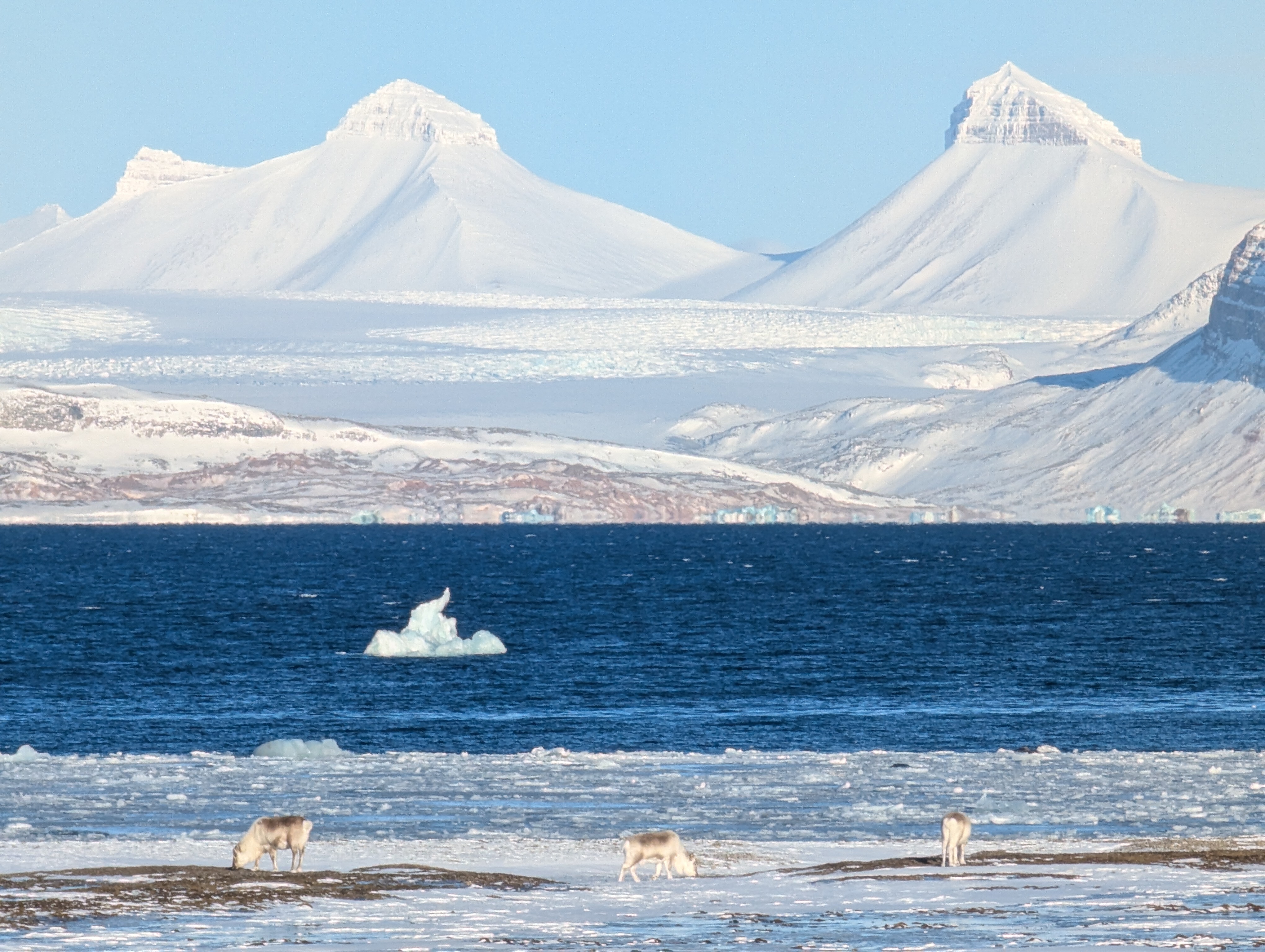
Marine phytoplankton plays a fundamental role in Earth’s climate system, yet reconstructing past marine productivity remains a major challenge. The Ice2Ocean project explores a novel approach: identifying new ice-core proxies for marine productivity using non-target screening (NTS) analysis of Arctic snow and atmospheric aerosols.
The project focuses on the Svalbard Archipelago, where daily snow samples were collected before and during the spring phytoplankton bloom. By combining high-resolution mass spectrometry with advanced data analysis, researchers aimed to detect organic molecules whose abundance changes in response to marine biological activity.
A key milestone was the successful optimization of analytical methods, enabling the detection of hundreds of organic compounds in snow samples. The study identified 632 compounds in Arctic snow, many of which exhibited strong changes during the phytoplankton bloom period.
Now the challenge is understanding which compounds are directly related with phytoplankton emissions: a lot of work ahead! I aim to present the first preliminary results at the IPICS Conference in Banff next October.

Leave a Reply